Where the Senses Remember
Why Culture Is Felt Before It Is Understood

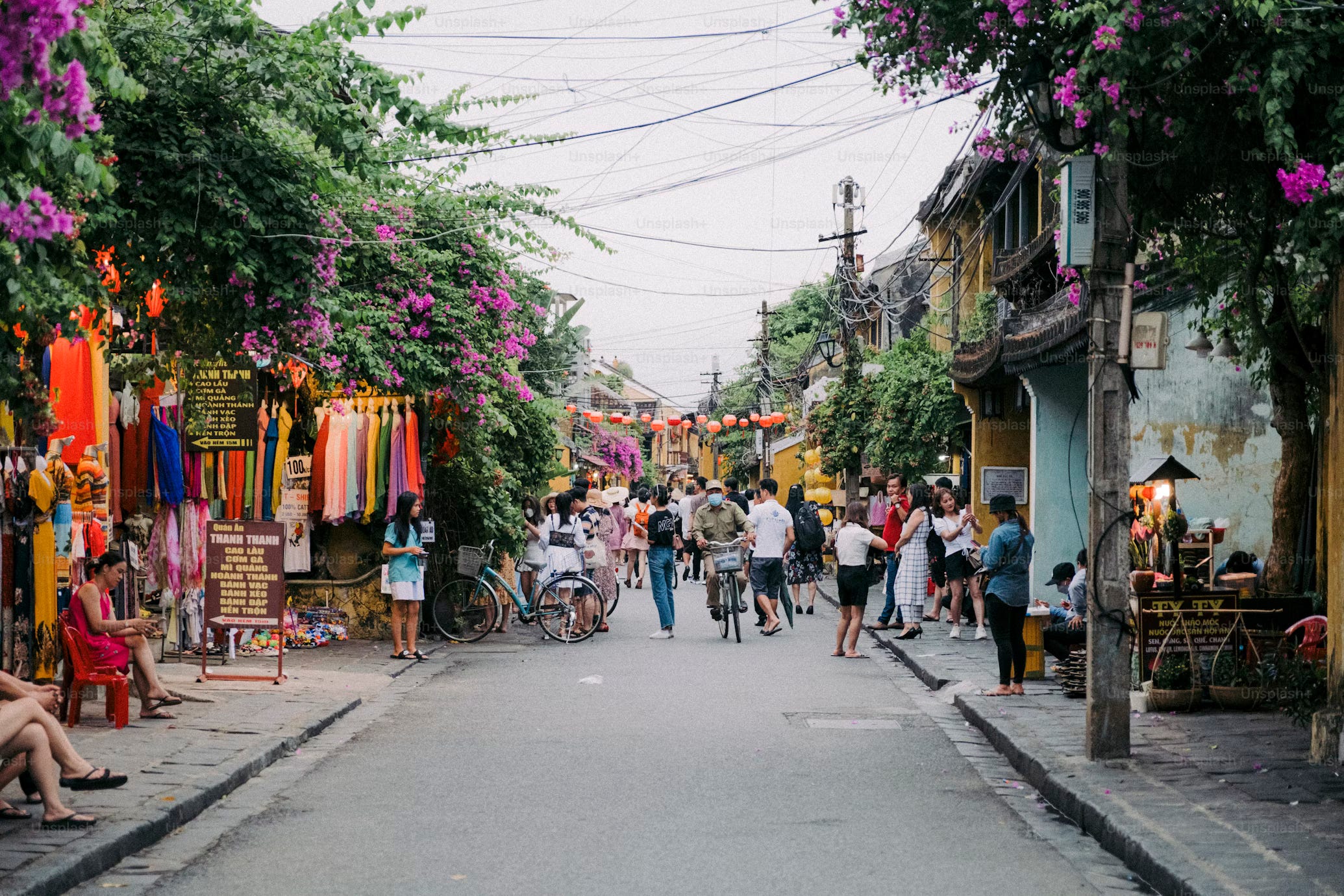
In our increasingly uniform world, where airports blur into one another and high streets echo the same brands, one might be forgiven for wondering if all places are becoming the same. And yet, even amidst such surface-level sameness, something distinct lingers — an aroma, a sound, a texture — that reveals where one truly stands. These sensory imprints, subtle yet indelible, are the quiet custodians of cultural identity.
I have often found that one can tell a land by the feel of its morning. The spice-scented air of India, heavy with flavours, is unlike the citrusy dawn of southern Europe where sea breeze carries echoes of late-night guitars. The mournful call to prayer in Istanbul, rising above the clatter of simit sellers, is as telling of place as Tokyo’s silence on a crowded morning train — noisy with etiquette, not voice. These are not tourist attractions; they are atmospheric truths.
The Power of the Tangible
The real markers of civilisation do not lie in monuments alone but in the mundane, the tactile, the consumable. The bitter strength of Turkish coffee served in tiny porcelain cups, with grounds thick enough to tell fortunes, carries the echo of Ottoman parlours and the pace of slow conversation. In Kyoto, a woman in a silk kimono performing a tea ritual so exacting, one feels as if time itself were obeying her.
In India, the rhythm of life is carried in its fabrics. The rustle of a Banarasi sari, with its gold-threaded opulence, speaks volumes about centuries of craftsmanship and celebration. Meanwhile, in southern China, the precision of a hand-pleated dumpling — its pleats uniform, its shape near mathematical — is a culinary microcosm of Confucian order.
Even music, a seemingly universal language, speaks in regional dialects. The plaintive strains of the bağlama in a Turkish meyhane differ profoundly from the upbeat pulse of flamenco echoing through a Spanish courtyard. The melancholic dhrupad from a Benaras ghat has little in common with the disciplined minimalism of Japanese gagaku, and yet each is unmistakably rooted in its own soil.
The Ghost in the Global Machine
Globalisation offers us remarkable access, but it also smooths away texture. A bowl of ramen in Milan may resemble its Tokyo counterpart in form, but rarely in soul. Yoga, as practised in Californian studios, is often shorn of its meditative and philosophical spine. A bite of pizza in a Beijing mall can resemble Italy, but it will not smell of sun-warmed tomatoes or sound like church bells over Neapolitan rooftops.
This is not to lament fusion or innovation. Rather, it is to observe that cultural expressions are not just products — they are processes. One cannot fully grasp Chinese calligraphy without sensing the breath behind the brushstroke, nor understand a Neapolitan folk song without the grit of the street that gave it voice.
The Sensory Trail to Meaning
Engagement with culture often begins with the senses. A traveller’s first memory of Istanbul may not be of Hagia Sophia’s vast dome, but of the sweetness of lokum on the tongue. In Andalusia, it might be the scent of orange blossom in spring. These impressions, sensory yet loaded, are the gateways to deeper inquiry.
A dish, a textile, a cadence in speech — these are not trivialities. They are portals. My own fascination with Chinese tea ceremonies led me to Daoist principles of harmony; while immersion in Indian classical music reveals entire cosmologies embedded in raga structure. From these tangible beginnings arise more abstract recognitions: of how a people think, worship, love, mourn.
Conclusion: In Praise of Texture
In a world increasingly defined by velocity and efficiency, it is these slow, textured encounters that resist erasure. They persist in memory not as facts but as feelings — traces left not on the itinerary but on the senses. When next you encounter a taste, a tune, a scent that feels out of place in a homogenised landscape, pause. It is trying to tell you where you are.
These are not just artefacts of difference; they are expressions of soul, made perceptible through touch, sound, scent, and flavour. And if you follow them with patience and reverence, they may lead you beyond the postcard to the pulse.